
Cheek Sagging at 40? Check the Layer Before the Device
When a patient in their 40s tells me their cheeks have started to sag, the first thing I check is not which device to use. It's which layer is actually failing. Sagging is not one problem with one cause. Dermal laxity and SMAS fascia laxity look similar from across the room, but they come from different structures and need energy delivered at different depths. Pick a device by its marketing name instead of the layer it treats, and the result usually falls short of what the patient expected.
What's actually different between the dermis and the SMAS fascia
The dermis is the shallow layer built from collagen and elastin. When it loses elasticity, the result is fine lines and thinning skin that starts to droop under its own weight. The SMAS, short for the superficial musculoaponeurotic system, sits deeper: a fibromuscular layer between the subcutaneous fat and the facial muscles. According to StatPearls, the peer-reviewed anatomy reference maintained by the National Center for Biotechnology Information, the SMAS is a key structure in facial aging and connects the mimetic facial muscles to the overlying skin. When this fascia loosens, cheek volume and the tissue around the nasolabial folds descend as a unit, which reads differently to the eye than dermal thinning even though patients often describe both as "sagging."
The two problems can and often do coexist, but they call for energy at different depths, and a plan built for one will underperform against the other.
Why the device you choose depends on the layer, not the brand name
Potenza RF Microneedling delivers radiofrequency energy through fine needles directly into the dermis, which stimulates collagen regeneration where the tissue itself has thinned. Ultherapy PRIME works differently: it focuses ultrasound energy at the SMAS layer to contract the fascia itself, which is why it's positioned for structural laxity rather than surface texture. As the clinic director at UH CELL in Gangnam, I don't start a consultation by asking which device a patient wants. I check which layer has loosened, using skin diagnostic imaging, and design the plan around what that imaging shows.
Sequencing matters more when the visit is short
Most of the Japanese patients I see come to Seoul on a two to four day trip. For that timeline, the order of treatment matters as much as the treatment itself. Stimulating the dermis and the SMAS fascia aggressively on the same day compounds swelling and extends the recovery window a short trip doesn't have room for. For patients on a tight schedule, I typically sequence fascia stimulation first and place dermal regeneration work later in the visit, once there's enough recovery buffer to absorb it. Rejuran, a skin booster, is suited to gradual elasticity and fine-line improvement rather than immediate lift, so I usually place it during the recovery window that follows fascia work rather than stacking it on the same day.
How recovery fits into a short visit
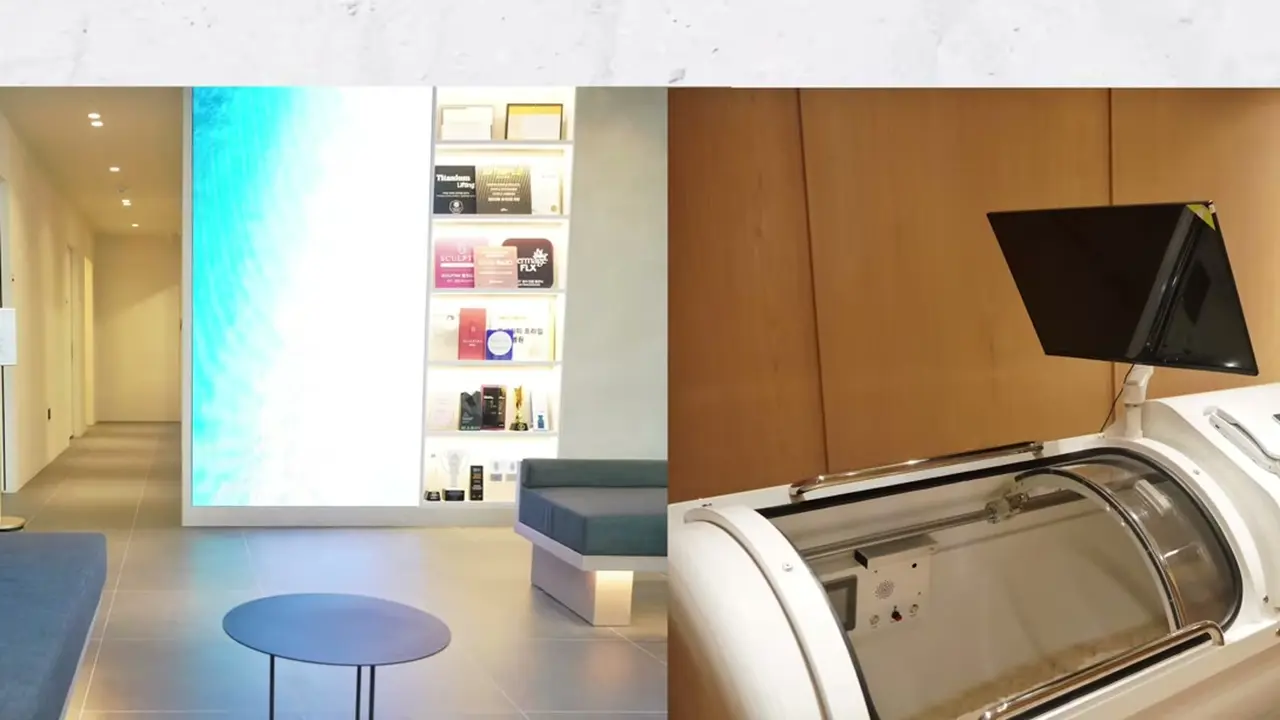
Our Gangnam clinic operates inside the UH FLAT SIGNATURE Gangnam hotel building. UHC hotel guests can choose one complimentary benefit: a 30-minute oxygen chamber session or a vitamin IV drip. If both are used, the vitamin IV drip costs KRW 55,000. I've written in more detail about how that recovery sequencing works for short-stay visitors in our piece on what changes when the clinic and the hotel share one building.
FAQ
Do I have to choose between RF microneedling and ultrasound lifting?
Not necessarily. Many patients have some degree of both dermal and SMAS laxity, so after diagnosis it's common to stage the two treatments across separate points in the visit rather than treat only one layer.
Can both treatments fit into a short trip?
It depends on how much recovery buffer the schedule allows. I confirm the length of stay during the diagnostic consultation first, then sequence treatments so the more demanding one comes early and lighter, regenerative work follows once swelling has settled.
How do you decide which layer is causing the sagging?
I rely on skin diagnostic imaging rather than a visual estimate alone, since dermal thinning and SMAS laxity can look similar on the surface but require energy delivered at different depths.



댓글 (0)
댓글 작성
댓글을 작성하려면 로그인이 필요합니다.
로그인하기