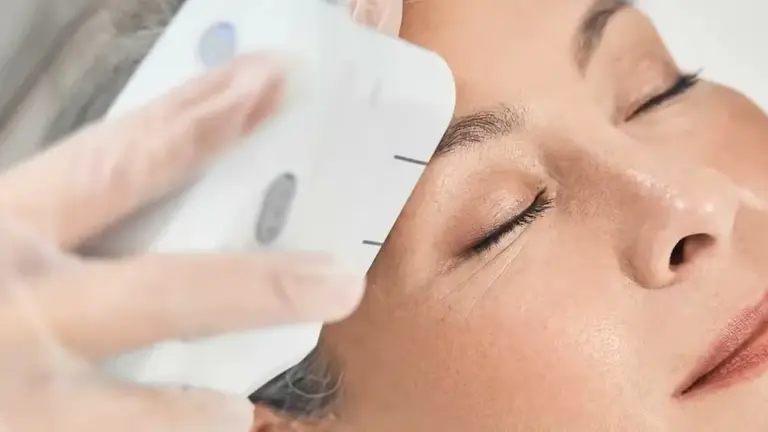
A 2016 expert consensus says device-based lifting goes first, skin boosters after. Here's the tissue evidence behind that order and how we schedule it.
TL;DR: When device-based lifting and skin boosters are scheduled on the same day, the lifting device goes first and the injections follow, matching a 2016 international expert consensus on sequencing energy devices with injectables. We set this order as our default at UH CELL Clinic Gangnam after an individual skin assessment, then decide with each patient whether same-day combination or separate visits fits the remaining stay. The tissue response to lifting continues for roughly 90 days after treatment, which is what actually determines when results are visible.
Patients traveling to Seoul on a short visit often ask about combining a lifting treatment with a skin booster in one trip. Before we discuss which specific treatments, the first thing we sort out in consultation is not the treatment names themselves. It is the order and spacing between the two.
Why the Device Goes First
Fifteen aesthetic specialists convened for a formal consensus process published in Dermatologic Surgery in 2016, addressing how to sequence botulinum toxin, dermal fillers, and microfocused ultrasound with visualization, the device category that includes Ulthera-type lifting. Consensus was defined as agreement from at least 75 percent of the panel. For same-day treatments, the panel concluded that botulinum toxin and fillers could be performed together in either order, but microfocused ultrasound with visualization should be performed before the injectable agents.
The same consensus recommended spacing consecutive treatments one to two weeks apart, giving side effects time to resolve and allowing enough time to judge the result before adding another procedure. Two separate decisions come out of that: what can go into a single visit, and what needs its own visit entirely.
For a short-stay patient, this gives the device-based lifting session a fixed place in the sequence. It goes first whenever a same-day combination is chosen, so the injectable step follows the tissue response the device has already started.
The 90-Day Window Behind the Result
A tissue study by Kay Marquardt and colleagues at Merz Aesthetics, published in the Journal of Cosmetic Dermatology in 2024, examined what happens inside the skin after microfocused ultrasound treatment. The device created thermal coagulation points at three depths, 1.5mm, 3.0mm, and 4.5mm. At day 14, the study observed fibroblasts gathering around those coagulation zones along with an active inflammatory response. By day 90, the inflammation had resolved and the denatured collagen had reorganized into newly formed collagen fibers, with newly formed elastin fibers also visible at the treatment sites.
The skin's appearance right after treatment lags behind the eventual result, since remodeling continues well past the two-week mark. That gap is also why the panel's one-to-two-week spacing recommendation makes sense: it gives the initial inflammatory phase time to settle before another procedure is layered on, without requiring a wait for the full 90-day remodeling process before every follow-up step.
How We Plan This Around a Short Stay
Our Gangnam location sits inside the UH FLAT SIGNATURE Gangnam hotel building. Dr. Kim Yeonjin, our director, handles diagnosis, treatment planning, and the procedures themselves, and Japanese, Chinese, and English-speaking staff are on site for consultation. Hotel guests receive a complimentary oxygen chamber session and vitamin IV drip, so post-treatment rest continues in the same building rather than requiring a separate trip somewhere else.
How long each treatment's own result takes to settle, covered separately for toxin, filler, and lifting timelines, factors into that same-day-or-separate-visit decision. For patients staying two to seven days, we work backward from the departure date. We decide which treatment areas can be combined in a single visit and which should move to a follow-up visit, and we write the one-to-two-week spacing recommendation directly into the return-visit plan when a second session is realistic within the trip, or into the aftercare guidance when it is not.
This is also where treatment area matters. A single visit that combines a lifting pass on one area with a skin booster on a different area follows a different logic than layering both on the same area on the same day, since the consensus recommendation on device-before-injectable sequencing applies specifically to same-day, same-area combination. Skin booster downtime itself varies by injection depth and product, which is a separate factor from this sequencing question but often comes up in the same consultation.
FAQ
Can I get a skin booster on this trip and save lifting for a later visit?
Yes. Splitting the two across separate visits removes the same-day sequencing question entirely, since the device-before-injectable order only applies when both are done in one session. We assess in consultation which approach fits your skin condition and remaining travel time.
Can different areas be treated on the same visit with different priorities?
Yes, when the treatment goals differ by area, we plan each area separately. Which area is addressed first depends on the skin assessment and how many days remain in the stay.
Do I need to arrange my own interpreter?
No. Japanese, Chinese, and English-speaking staff are on site at the Gangnam location, so consultation and treatment guidance are handled without an outside interpreter.

댓글 (0)
댓글 작성
댓글을 작성하려면 로그인이 필요합니다.
로그인하기