Whether you need an interpreter for a Seoul dermatology visit depends on three separate moments, not the front desk: booking, the consultation and consent explanation, and follow-up after you fly home. Dr. Kim Yeonjin of UH CELL Clinic's Gangnam branch explains what to confirm at each stage before you travel.
Whether you need an interpreter for a Seoul skin clinic visit depends on three separate moments, not on whether the front desk speaks English: booking, the in-person consultation and consent explanation, and follow-up after you return home. Focus your interpreter support on whichever one of those three moments is not covered in your language.
Hello, I'm Dr. Kim Yeonjin, director of UH CELL Clinic's Gangnam branch. The question I hear most often from English-speaking patients before they book is whether they should bring an interpreter. My first questions back are usually which treatment they are considering and how many days they plan to stay, because the answer changes with both.
Why Seoul Skin Clinics Have Grown Used to Treating International Patients
According to a 2025 report from the Korea Health Industry Development Institute, compiled with Korea's Ministry of Health and Welfare using 2024 figures, the number of international patients treated in Korea reached 1.17 million that year, nearly double the 610,000 recorded the year before. The same report found that Seoul accounted for 85.4 percent of those visits, and dermatology was the single most common specialty booked. By nationality, patients from Japan made up the largest share, followed by the United States at 8.7 percent and Taiwan at 7.1 percent.
Medical trade outlets including Medigate News and Doctors News covered the same figures, describing a clinic landscape in Gangnam that has scaled up foreign-language staffing to match the volume of patients arriving specifically for dermatology care.
That volume explains why language support exists. It does not confirm, on its own, that what you understand in the consultation room matches the treatment plan actually being carried out. That confirmation still has to happen visit by visit.
Where Language Support Actually Matters
Three separate moments carry different risk if the language gap is not covered:
Booking and pre-visit questions. Check whether email or messaging support is available in English, and how appointment confirmations will reach you.
Consultation and consent. This is the moment that matters most: can the scope of the treatment, expected recovery time, possible side effects, and cost be confirmed back to you in your own language, not just explained once and assumed understood.
Follow-up after you fly home. If redness or swelling lasts longer than expected, know in advance which contact channel you will use and in what language.
If all three moments are covered in English, bringing your own interpreter usually is not necessary. If the consent step depends entirely on a translation app, I would recommend either narrowing the treatment scope to something more conservative or arranging an interpreter for that step specifically.
How We Handle This at Our Gangnam Branch
Our Gangnam branch keeps interpreter staff on site for Japanese, Chinese, and English. In consultation, I check skin thickness, prior treatment history, and how many days a patient has left in Seoul before I finalize the scope of any procedure. At our Seocho branch, director Dr. Kim Kyung-soo holds medical licenses in both Korea and Japan, which matters to Japanese patients specifically because it is a credential they can verify through their own country's licensing system rather than taking a clinic's word for it.
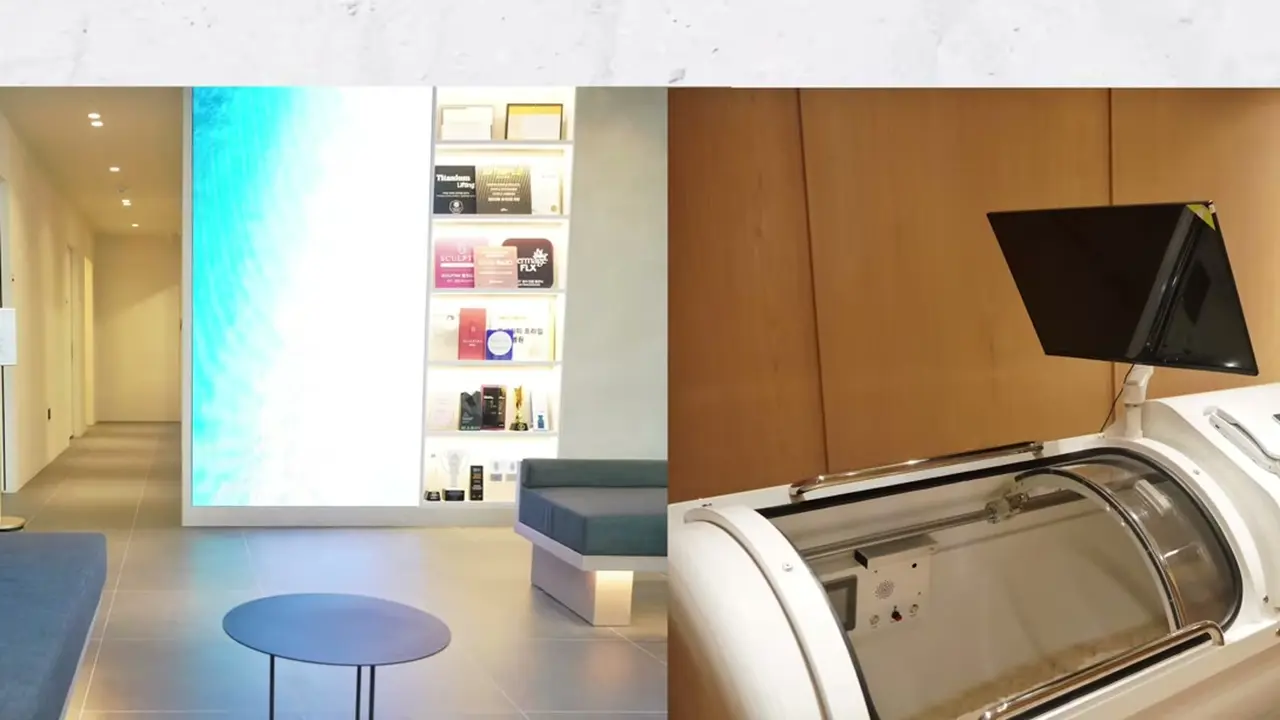
Our Gangnam branch sits on the second floor of the UH FLAT SIGNATURE Gangnam hotel, so patients can return to their room directly after a procedure. Guests staying at UHC hotels can choose one complimentary recovery option, either a 30-minute oxygen chamber session or a vitamin IV drip; using both means the IV drip is billed at 55,000 KRW. For a patient working around a short trip, that arrangement means recovery care and lodging happen in the same building rather than requiring a separate stop.
FAQ
Can a translation app cover the whole consultation?
It can carry everyday conversation reasonably well, but treatment names and side-effect terminology are where mistranslation risk rises. I would still recommend having a person interpret the consent explanation specifically, even if the rest of the visit runs through an app.
Can I get my consent form in English?
Document language varies by clinic. Ask before you book which language the consent form and post-procedure care instructions will be provided in, so you are not sorting that out on the day of treatment.
Should I trust the interpreter staff or the doctor's explanation more?
They serve different roles. Interpreter staff handle scheduling and general guidance. The scope of the treatment and the recovery plan are judgment calls that should come from the physician handling your care, with the interpreter making sure you understand it accurately.
Skin response and recovery time vary from patient to patient. Please consult a physician directly for an accurate diagnosis and treatment plan before booking.


댓글 (0)
댓글 작성
댓글을 작성하려면 로그인이 필요합니다.
로그인하기