
At UH CELL Clinic Seocho, placenta injections are used for fatigue recovery, menopause symptom support and skin condition, and every vial is opened in front of the patient before the injection starts. Repeat intervals run from one to three times a week to longer, steady spacing, depending on the purpose, the product and the person.
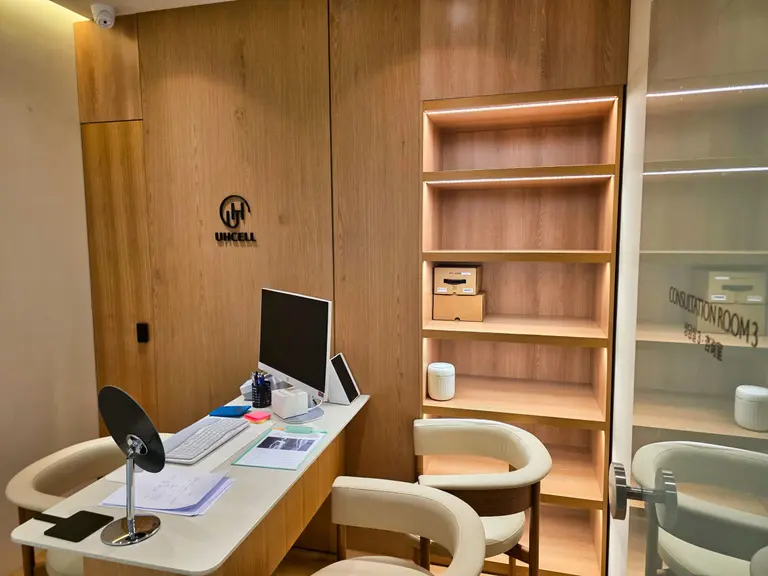
Hello. I am Dr. Kyungsoo Kim, director of UH CELL Clinic Seocho. I graduated from Seoul National University College of Medicine and hold medical licenses in Korea and Japan; more on my background is on the Seocho medical staff page.
What placenta injections contain and do
A placenta injection starts with human placenta once the blood and hormone components are removed. What's left gets extracted or hydrolyzed into the active ingredients, which include amino acids, peptides, nucleic-acid-related compounds, vitamins and minerals. Products differ in method: some extract the active ingredients directly, others hydrolyze them first, and that choice affects the product more than the raw material does.
In aesthetic and wellness care, placenta injections get used for fatigue recovery, condition management, support around menopause symptoms and skin condition. One product doesn't suit every goal, so at consultation we ask which issue matters most right now: fatigue, menopause symptoms or skin condition. The answer shapes which product and which interval we discuss next.
The injection visit at Seocho
We give the injection without anesthesia. The needle causes a brief prick, and a dull, tight feeling can follow while the solution goes in. The injection itself takes about five minutes, though the exact time changes with the injection site, the route and the dose.
UH CELL Clinic Seocho is a six-minute walk from Exit 6 of Nambu Bus Terminal Station on Line 3. We see patients on weekdays from 10 a.m. to 8 p.m., with last reception at 6:30 p.m., and on weekends from 10 a.m. to 5 p.m., with last reception at 4:30 p.m. A five-minute injection fits inside those hours without trouble, so patients can schedule around other plans for the day. Interpreting staff who can assist in Japanese, Chinese and English work at the clinic for patients visiting from overseas.
After the injection, patients return to daily activity right away. There's no separate recovery period built into the visit. Pain, redness, bruising, firmness or itching can appear at the injection site for a short time. Contact the clinic if any of these last longer than expected or get worse instead of settling. For about a week afterward, we advise skipping saunas, hot springs and strenuous exercise, cutting out alcohol and smoking, and keeping up sun protection and moisturizing.
Repeat intervals and other condition care
Placenta injections can repeat weekly, one to three times, or at a steady interval set further apart, and the right choice depends on the purpose, the product and the person. A weekly schedule works for patients who live in Seoul or are staying for an extended period. It doesn't work the same way for patients staying just a few days, since the number of sessions that fit inside a short trip is limited. Tell us your return date at consultation, and we'll plan the interval around that window instead of a generic schedule.
A few details help at consultation:
- The issue that matters most right now: fatigue, menopause symptoms or skin condition
- Current medications and any allergy history
- The product name and date of your last placenta injection, if you've had one before
- How long you're staying in Seoul and your return date
Beyond placenta injections, Seocho also runs several IV drip programs and an oxygen chamber used in 30-minute and 60-minute sessions. Patients focused on overall condition, not just one symptom, can look at these programs alongside placenta injections. We go through what each program includes and what it costs in our article on oxygen chamber and IV drip options after treatment.
댓글 (0)
댓글 작성
댓글을 작성하려면 로그인이 필요합니다.
로그인하기