Before a short trip home, full recovery in three days realistically covers only low-irritation toning and light peeling. Dr. Kim Yeonjin of UH CELL Clinic Gangnam explains why the type and depth of pigment, not the calendar, decides whether melasma or age spots can be safely treated before a flight, and lays out a three-day treatment order with aftercare and red-flag guidance.
In a three-day window before departure, the realistic scope for a full recovery is low-irritation toning and light peeling, treatments where redness settles within a day or two. What decides the plan is whether the pigment sits in the epidermis or reaches into the dermis, and how many days remain before the flight. The fewer days left, the less I recommend loading a single high-energy session into that window.
Hello, I'm Dr. Kim Yeonjin, director of UH CELL Clinic Gangnam. The question I hear most often from patients on a short visit is whether melasma or age spots can be cleared in just a few days. I look at the type of pigment before I look at the calendar.
The Type of Pigment Comes Before the Calendar
Freckles and age spots with a well-defined edge sit mostly in the epidermis, and they tend to respond within a smaller number of sessions. Melasma follows a different course. A 2011 review in the Journal of the American Academy of Dermatology found that laser and light therapy can be effective for melasma but carry a substantial risk of making the condition worse, and it noted that chemical peels are a second-line option that should be used carefully on darker skin tones.
That is why, at the first visit, I check how deep the pigment sits and how the skin barrier is holding up. When melasma is suspected, I plan for lower energy spread across more sessions rather than one strong pass.
What Actually Changes Recovery: Power and Spacing, Not the Device Name
A 2026 retrospective study of 99 patients in the Journal of Cosmetic and Laser Therapy compared a fractional 1064nm picosecond laser with a low-fluence Q-switched Nd:YAG laser. Post-inflammatory hyperpigmentation appeared in 7.4% of the picosecond group and 13.3% of the Q-switched group, and the difference between the two groups was not statistically significant. I read that result as a reminder that power settings and the spacing between sessions shape recovery more than which device delivered the energy.
If You Have Three Days, Here Is the Order I Recommend
Day 1: Diagnosis and consultation, starting with the lowest-irritation option on the table.
Day 2: A check on redness and swelling, with soothing care added if needed.
Day 3: No additional high-energy treatment. I use this day to finalize a sun protection plan before you head to the airport.
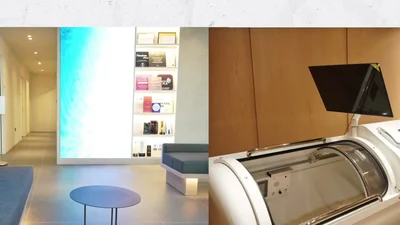
Our Gangnam clinic sits on the second floor of the UH FLAT SIGNATURE Gangnam hotel, so patients can go straight up to their room to rest after treatment, and Japanese, Chinese, and English-speaking staff are on site for interpretation. Guests staying at UHC group hotels can choose one complimentary option between a 30-minute oxygen chamber session or a vitamin IV drip; if you use both, the vitamin IV drip is priced at 55,000 KRW. If your itinerary already has you weighing how to sequence more than one treatment in a short stay, our guide on ordering lifting treatments in Seoul walks through the same kind of day-by-day planning.
FAQ
Can melasma clear up in a single visit?
The American Academy of Dermatology notes that following a melasma treatment plan usually takes three to twelve months before results show, and longer-standing melasma can take even more time. On a short visit, I treat the appointment as a starting point rather than a finish line.
What matters most for aftercare once I'm back home?
The American Academy of Dermatology advises that sunlight triggers melasma, so daily sun protection matters even on cloudy days: reapply SPF 30 or higher at least every two hours, and pair it with a wide-brimmed hat and shade. Skipping sun care after treatment makes it hard to hold onto any progress.
If redness lingers for several days after treatment, should I contact the clinic?
Yes. If redness and warmth are not fading, if pain is increasing, or if the color is deepening, please don't try to treat it yourself and seek medical attention instead. If you've already returned home, you can send photos so we can discuss how things are progressing.
※ Skin response and recovery time vary from person to person. Please consult a physician for an accurate diagnosis and treatment plan.


댓글 (0)
댓글 작성
댓글을 작성하려면 로그인이 필요합니다.
로그인하기