
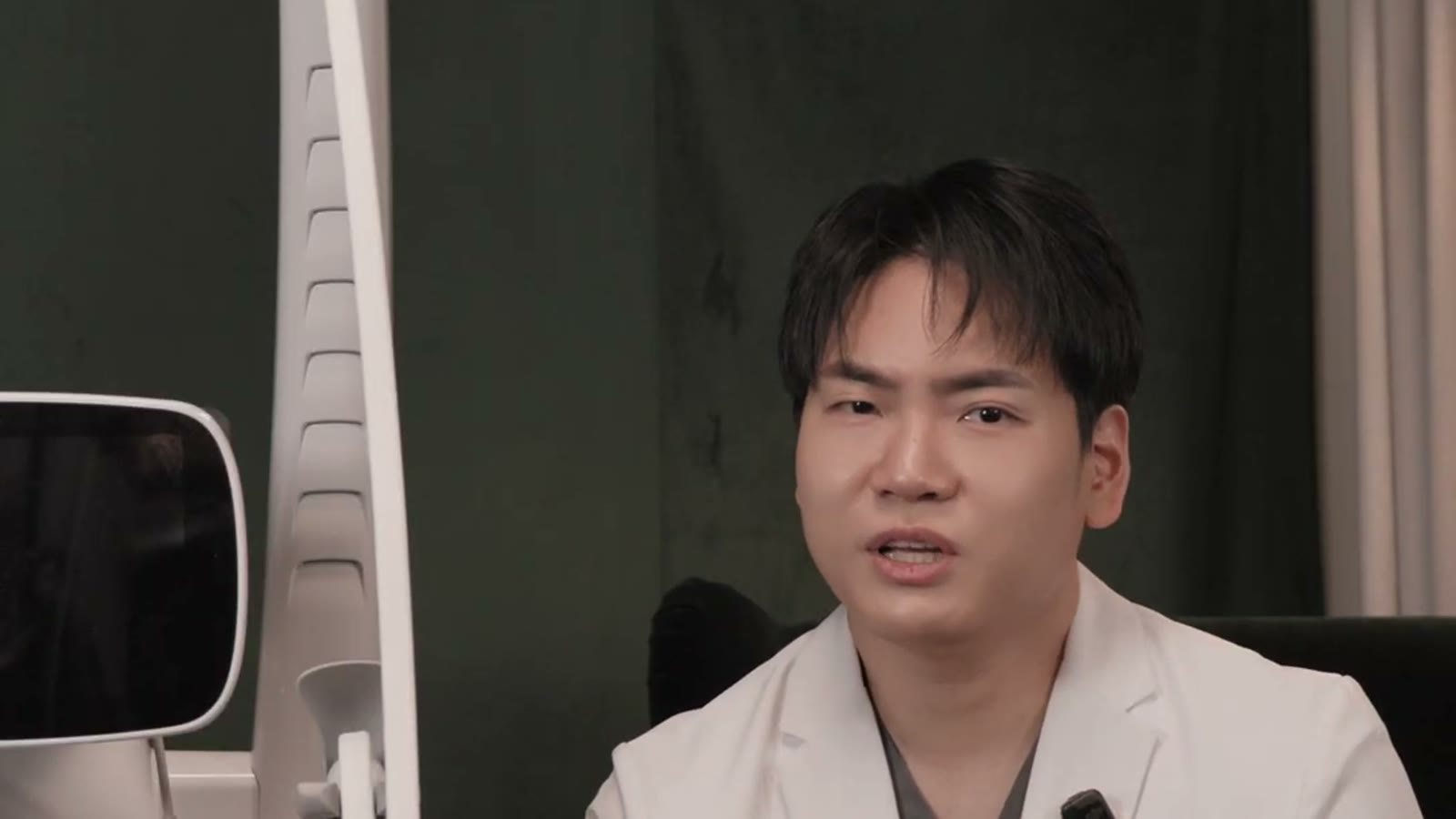
I'm Dr. Kim Yeon-jin, Chief Physician at UH CELL Clinic in Gangnam. When an American patient asks me how to plan a short trip to Seoul for a skin procedure, the question that actually matters isn't which device to book. It's where to spend the days afterward, before a long flight home.
American patients are showing up in Seoul's dermatology clinics in growing numbers
According to the Korea Ministry of Health and Welfare's 2024 foreign patient report, 1.17 million foreign patients visited Korea that year, nearly double the 610,000 recorded in 2023. Dermatology accounted for the largest share of any specialty — 705,044 patients, or 56.6% of all foreign patient visits, ahead of plastic surgery, internal medicine, and health checkups. Within that group, American patients numbered roughly 102,000, about 8.7% of the total, placing the United States third behind Japan and China.
Those numbers describe demand, not experience. A patient flying in from the US for a few days is not comparing clinics the way a long-term resident would. They're working against a fixed calendar: flight dates, a hotel reservation, maybe a few sightseeing days built around the appointment. The clinic that fits that calendar is a different kind of fit than the one that simply has the newest machine.
The technology gap isn't the real obstacle — the itinerary is
Eunice Park, MD, a New York-based facial plastic surgeon, described Korea to Elle as a place offering "advanced skin regeneration therapies to precision facial contouring techniques that are five to 10 years ahead of the United States." That kind of assessment is common among American physicians who track the Korean aesthetic market, and it explains part of why patients travel.
But a sophisticated device doesn't remove the biology of recovery. Lifting and resurfacing procedures can leave swelling or redness that takes several days to settle, and how much buffer a patient needs before a transatlantic or transpacific flight depends on the specific treatment and how their skin responds. That buffer is a scheduling problem as much as a medical one — and it's usually the part left out when patients research "best clinic in Seoul" before they book.
In practice, this means the itinerary question comes before the device question. Where a patient rests on day one and day two after treatment, how far that place is from the clinic, and whether anyone there can answer aftercare questions in a shared language all shape how the days before departure actually go.
Diagnosis, treatment, and recovery inside the same building
Our Gangnam location sits inside the UH FLAT SIGNATURE Gangnam building, and our Seocho location sits inside UH FLAT The Seocho. Both are structured so a patient's diagnosis, procedure, and rest period can happen without moving between separate buildings across the city.
We start every case with an individual skin diagnosis before designing the treatment plan — the same procedure name can call for a different approach depending on skin thickness, prior treatment history, and how much time a patient actually has before their flight. For guests staying in the hotel component of the building, we run an oxygen chamber and vitamin IV drip program at no additional cost, so the rest period after a procedure can happen in the same place rather than requiring a separate trip to a spa or wellness center. Our Gangnam location also keeps Japanese, Chinese, and English interpreters on site, which matters most in the narrow window right after a procedure, when a patient needs a clear answer about a symptom rather than a delayed one. We described this same building structure in more detail in our earlier piece on what it means for a clinic to sit inside a Seoul hotel, including how it differs from a clinic that is simply located nearby.
None of this shortens the biology of healing. What it changes is how many separate trips, translations, and unfamiliar taxi rides a patient has to manage while that healing happens — which, for someone with five or six days total in the city, is often the more practical variable.
FAQ
Can I fly home right after a lifting or resurfacing procedure?
It depends on the specific procedure and how your skin responds. Swelling or redness can persist for several days after some treatments, so it's safer to build a recovery buffer into your itinerary before your return flight rather than scheduling the procedure for your last full day. We review this timing with each patient individually during the consultation, based on the treatment plan and travel dates.
Do diagnosis, treatment, and recovery all happen in the same building?
At our Gangnam and Seocho locations, yes — the clinic sits inside the same building as the hotel component, so the diagnosis, procedure, and rest period afterward don't require moving to a separate building. Guests staying in the hotel can use the oxygen chamber and vitamin IV drip program as part of that recovery period.
Will someone be able to answer my questions in English if a problem comes up after treatment?
Our Gangnam location has Japanese, Chinese, and English interpreters on site, which is designed to reduce the language barrier during the consultation and in the days immediately after a procedure, when questions about symptoms or aftercare tend to come up.
If you're mapping out a short trip to Seoul around a dermatology procedure, we're glad to walk through the timing and recovery plan with you directly — you can see how we've structured the building itself in our piece on Seoul hotel dermatology clinics.


댓글 (0)
댓글 작성
댓글을 작성하려면 로그인이 필요합니다.
로그인하기