
V-RO lifting is known as a treatment that combines ultrasound and radiofrequency energy in one device. In consultation, I do not describe V-RO as a treatment that becomes better simply because the setting is stronger. I explain it as a lifting plan that must be designed according to facial structure. A heavy jawline with submental fullness and a thin face with little cheek fat should not be treated in the same way.
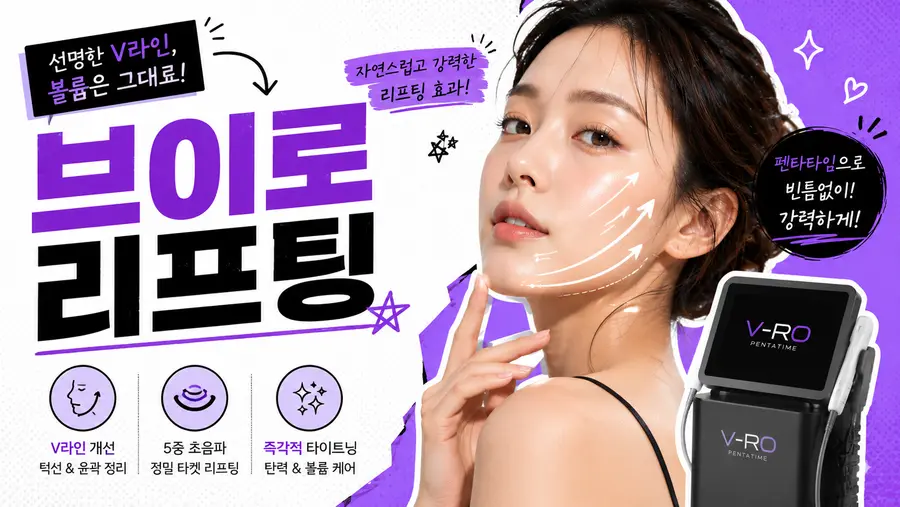
Which faces may be suitable for V-RO lifting?
V-RO is often considered because it can combine deeper ultrasound-based lifting with radiofrequency skin tightening. Patients interested in Korea travel, Korean dermatology, and a Gangnam skin clinic often ask about it when the jawline feels heavy, the lower face looks less defined, or the facial contour appears blurred. The cause of sagging still matters: fat volume, dermal laxity, and weakening of deeper support structures each require a different depth and energy plan.
Reducing side effects is about location, not just power
Common concerns include pain, swelling, hollowing of the cheeks, and asymmetry. These issues are not determined by the device name alone. Excessive heat in areas with limited facial fat, insufficient attention to nerve pathways, or overly short treatment intervals can increase the burden on the face. For that reason, V-RO lifting should be planned around treatment location, depth, energy level, and interval rather than shot count alone.
Why combine ultrasound and radiofrequency?
Ultrasound energy can target relatively deeper supporting layers, while radiofrequency energy can support tightening and elasticity closer to the skin surface. When the two are balanced properly, jawline refinement and skin tightening can be planned together. If the same ratio is applied to every face, however, the result may look less precise or create unnecessary stimulation.
What I check during consultation
When I evaluate V-RO, I check cheek fat volume, submental fat, skin thickness, previous lifting treatments, pain sensitivity, and available recovery time. If a patient already has cheek hollowing or thin tissue under the cheekbone, preserving contour and elasticity may be more important than aggressive lifting. Lifting is not simply about making the face smaller; it is a medical plan to reorganize lines that have loosened or descended.
Ultimately, satisfaction with V-RO lifting depends more on diagnosis and design than on the device itself. Even with the same device, results and recovery can change depending on which layer is treated, how much energy is delivered, and how often the treatment is repeated. If side effects are a concern, the first step is to distinguish whether the face needs fat reduction, elasticity improvement, or contour lifting.
🔗 UH CELL CLINIC SEOCHO
🌐 Official Links: https://go.uhcell.com/seocho


댓글 (0)
댓글 작성
댓글을 작성하려면 로그인이 필요합니다.
로그인하기