Horizontal neck lines, loose skin and platysmal bands need separate assessment. UH CELL Clinic Seocho outlines the differences, treatment limits and questions for consultation.
A horizontal crease across the neck, skin that has generally loosened, and a vertical band that only shows when you tense your neck are three separate changes. We don't expect one procedure to move all three by the same amount, so before we name a treatment, we ask which of these is actually bothering you and how it behaves at rest versus under tension.
Hello, I'm Dr. Kim Kyungsoo, director of UH CELL Clinic Seocho.
If you are considering a neck consultation with us, describe the feature that bothers you before choosing a procedure. I will explain how the concerns differ and which questions to discuss.
What Actually Separates a Crease, Loose Skin, and a Band
A horizontal line is a fold or groove that runs across the neck. Skin laxity is a broader change: the neck looks looser overall, and the line from the jaw down to the neck reads differently than it used to. A platysmal band is a vertical cord that becomes visible when the platysma, the thin muscle sheet covering the front of the neck, contracts.
A 2022 anatomical review of the platysma published in the journal Toxins draws this same distinction, separating horizontal neck lines from the vertical banding tied to muscle contraction. The paper is an anatomy reference, not a verdict on any single patient's neck. Seeing one of these shapes in the mirror does not, by itself, tell you which structure is driving it. Skin, muscle, fat, and the deeper support layer can all shift together, and a single visual cue can come from more than one of them.
What concerns you most
What we ask about
What to clarify in consultation
A crease that stays even when relaxed
When it started, whether it disappears when the skin is smoothed
Should the depth of the line and general skin laxity be evaluated separately?
Loose-looking skin, fine texture lines
The jawline-to-neck contour, surface quality
How much change can a skin-focused approach realistically deliver?
A cord that stands out under strain
Whether it appears at rest or only with effort
Is this closer to a muscle issue or a skin laxity issue?
That table is a starting point for the conversation, useful for framing what to raise with the physician. Pulling your own skin taut in a mirror and deciding a line has "disappeared" does not confirm which treatment is right for it.
What a Skin-Tightening Device Can and Cannot Reach
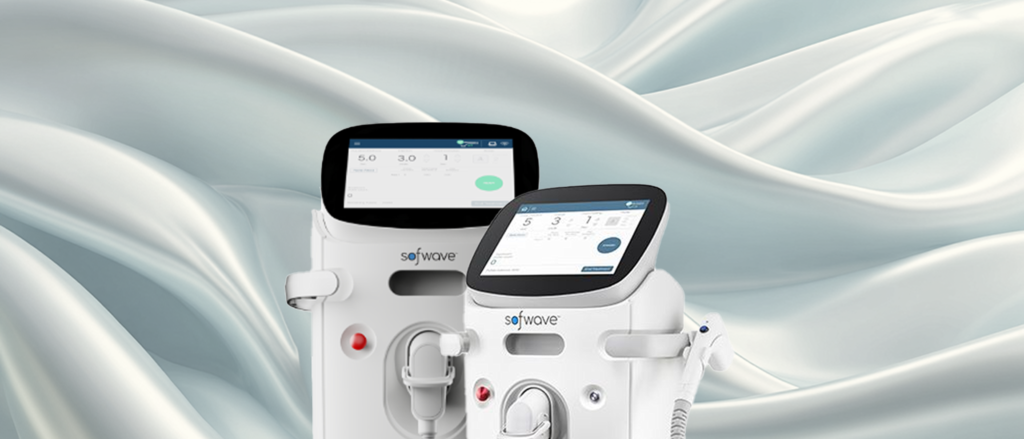
Sofwave is one of the lifting treatments we offer, and our own service page describes its effect on neck skin elasticity and fine lines. It works by delivering ultrasound energy into the dermis, the skin's structural layer, rather than adding volume or relaxing a muscle.
Sofwave's FDA 510(k) clearance documentation lists lifting lax submental (under-the-chin) and neck tissue among its indications for use in the United States. That reflects the scope of a U.S. regulatory filing, separate from domestic approval in Korea, and a submental-lift indication does not guarantee that every horizontal crease on the neck will close.
When we discuss a device-based option, we walk through which part of your concern it is designed to reach and which part is likely to remain. A patient whose main complaint is a deep, static crease should hear that distinction before booking anything, not after.
Injectables Need Their Own Conversation, Product by Product
Toxin and filler injections get grouped together as "the same kind of shot," but they work through different mechanisms and carry different risks. A product's approved use on the face covers that area only; the neck needs its own confirmed indication. Before any injectable is discussed for the neck, we confirm the exact product name, its approved indication and treatment area in Korea, and whether what's being proposed falls inside or outside that approved scope. If it falls outside, that needs its own explanation, including the reasoning, the alternatives, and the risk.
Filler carries risks beyond bruising and swelling, including nodules, infection, and the rarer but more serious complication of unintended injection into a blood vessel. Toxin has its own considerations tied to the treatment site and the function of the surrounding muscles. A physician makes that call in consultation, weighing your specific anatomy rather than a comparison chart.
Posture Is Not the Whole Story
Patients frequently assume a slouched, phone-down posture is the sole cause of neck lines, and correcting it will make the lines disappear. The neck moves constantly through the day, and both horizontal lines and general skin condition come from more than one factor. Expecting posture correction alone to erase a line that has already set in is likely to disappoint.
Ordinary skin care, moisturizing and sun protection among them, is worth discussing separately from any procedure. A hydrated, well-protected neck can look and feel better without changing the depth of an existing crease or the visibility of a band. Improved skin quality and the resolution of a deep line or pronounced band are separate outcomes, worth tracking independently.
Preparing for a Seocho Consultation
Before your visit, take note of which feature bothers you most in your everyday posture, observed naturally rather than held for a photo. If you have older pictures, they help establish when the change started. Mention any prior treatment to the neck or under the chin, including the product name, roughly when it was done, and anything that felt off afterward.
During the consultation, ask not only what result is possible but what is likely to remain unchanged, what recovery to expect, and when the next check-in should happen. Disclose current medications and existing conditions, and do not stop any medication on your own before the visit. If you're working around a fixed travel date, it is more useful to confirm whether follow-up and recovery monitoring can happen in that window than to ask for a guaranteed result by a specific day.
FAQ
Can horizontal lines and a vertical band be treated in the same visit?
They involve different structures, so each needs its own evaluation. Whether both are addressed on the same day, staged across separate visits, or observed for now depends on your specific anatomy and the physician's assessment.
If pulling my skin makes the line look less visible, does that mean a lifting device alone will fix it?
That informal test alone does not measure the depth of the crease or how much the deeper support layer has changed. It's worth mentioning in consultation, but it is one data point among several rather than a treatment decision by itself.
How long does the result from a neck treatment usually last?
There is no single figure that applies across treatment types and individual patients. Ask for the expected range for the specific approach discussed, the point at which progress should be reassessed, and the criteria for deciding whether a repeat session is needed.
Individual skin response and recovery time vary. Talk with the treating physician about the exact diagnosis and treatment plan for your neck before deciding on a procedure.




댓글 (0)
댓글 작성
댓글을 작성하려면 로그인이 필요합니다.
로그인하기