
Why We Operate Inside a Hotel, Not Beside One
When patients ask us what makes a hotel-and-clinic plan actually work, our answer is not the hotel's star rating or its distance from Gangnam Station. It's the elevator ride. We operate as an in-building amenity of a UHC group hotel in Gangnam, on the second and third floors of the same structure where guests sleep. A patient rides down from their room for a consultation or a procedure, then rides back up to recover in the same room. There is no taxi, no second address, no gap between "done with treatment" and "resting."
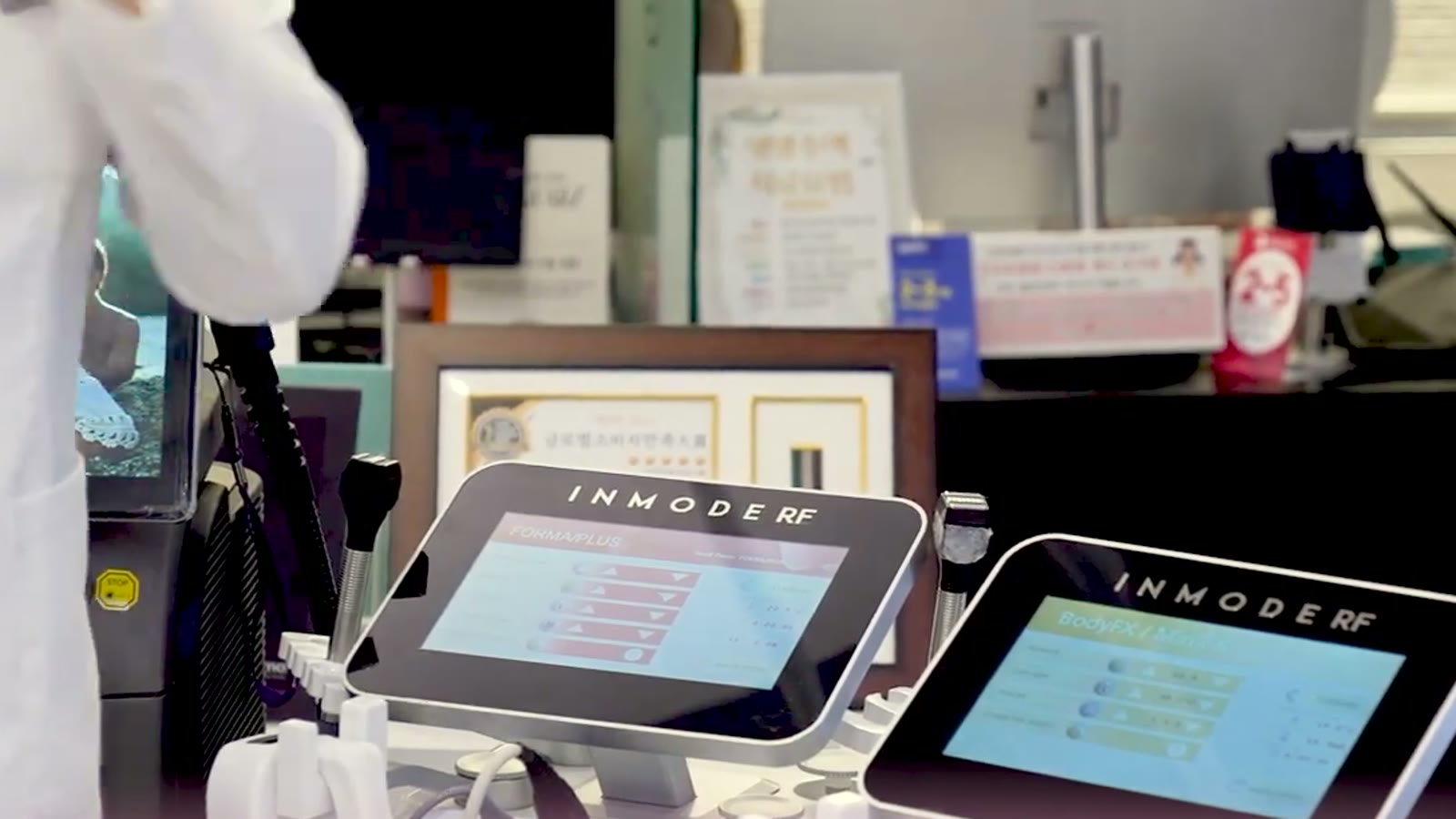
Why the real variable is the route, not the neighborhood
Most people booking a Seoul stay start with subway access or how close a hotel sits to a shopping district. That's a reasonable filter for a vacation, but it misses what actually matters after a skin procedure. Post-procedure guidance for injectable and energy-based treatments typically calls for 24 to 48 hours of reduced sun exposure and friction on treated skin. Inside that window, the variable that matters is not which block the hotel sits on. It's how long it takes to get from the treatment chair back to a bed, and what the skin is exposed to in between. Every minute spent outdoors in a taxi or on foot during that window works against the recovery the treatment is supposed to protect.
The scale of demand behind this question keeps growing. According to the Ministry of Health and Welfare, 2.01 million foreign patients visited Korea for medical treatment in 2025, the first time the annual figure passed two million since the ministry began tracking it in 2009. Dermatology accounted for 62.9 percent of that total, by far the largest share of any specialty. The ministry's release also showed Seoul drawing 87.2 percent of all foreign patients, a concentration tied to the density of registered international-patient institutions in the city.
Why the hotel line item deserves the same attention as the procedure line item
An industry analysis by the Korea Institute for Industrial Economics and Trade found that foreign patients and their companions spent roughly 12.5 trillion won on medical tourism in 2025, but only 3.3 trillion won of that went to actual treatment. The remaining spending went to lodging, transport, meals, and everything else that surrounds a short medical trip. When most of a visit's budget sits outside the treatment room, planning a stay as a separate decision from planning a procedure misses where most of the money, and most of the logistics risk, actually sits.
This is part of why some hotels in Seoul have added dedicated coordinators to help guests compare treatment options and pricing. That role exists precisely because, in most cases, the hotel and the clinic are different businesses in different buildings under different ownership. A coordinator's job is to bridge that distance. It does not remove it. The guest still travels, still waits between two schedules, and still carries the same friction and UV exposure a coordinator can advise around but not eliminate.
What changes when the clinic sits inside the hotel
Our Gangnam location sits on the second and third floors of the UH FLAT SIGNATURE Gangnam building. UHC hotel guests can choose one complimentary benefit: a 30-minute oxygen chamber session or a vitamin IV drip. If both are used, the vitamin IV drip costs KRW 55,000. Procedures take place in private treatment rooms, and when recovery calls for lying down, that means a few floors by elevator, not a car ride across the district.
For patients working with a short window, typically two to seven days in Seoul, this structure removes a category of time cost rather than shortening it. There's no travel time built around the treatment day, and less exposure to unplanned outdoor conditions during the recovery hours that matter most. Japanese, Chinese, and English-speaking staff are based at the Gangnam location, so consultation and aftercare instructions don't depend on booking an outside interpreter. If you're mapping recovery time against a flight home, our guide on what to avoid before flying after a skin procedure and our breakdown of how long Seoul skin treatments really last go through the timing in more detail.
What to ask before you book a "hotel plus clinic" plan
If a stay-and-treat plan is what you're looking for, a few questions separate a real one from a plan that only sounds like one:
- Is the clinic an in-building amenity of the hotel, or a separate business under a partnership arrangement? A partnership still means traveling between two locations.
- Is recovery care, such as an oxygen chamber or IV drip, included free for hotel guests, or is it a paid service from an outside provider?
- Is interpretation staff based on-site, or only scheduled for specific appointment windows?
- Are procedures done in a private room, or only in a shared treatment area?
Asking these four questions tells you whether "set plan" actually shortens the distance between treatment and rest, or whether it's a shared marketing phrase covering two buildings that still require a trip between them.
FAQ
If the clinic is in the same building as the hotel, is booking combined into one step?
No. Hotel reservations and clinic consultations are still separate processes. Being in the same building mainly means it's easier to schedule a clinic consultation once you've already checked in, since there's no travel involved.
Can I use the recovery care without having a procedure done?
UHC hotel guests can choose one complimentary benefit: a 30-minute oxygen chamber session or a vitamin IV drip. If both are used, the vitamin IV drip costs KRW 55,000.
Does the Seocho location work the same way?
Yes. Our Seocho location sits inside the UH FLAT The Seocho building, following the same in-building structure as Gangnam.
Can I get a consultation without bringing my own interpreter?
Japanese, Chinese, and English-speaking staff are based at the Gangnam location, so consultations and aftercare instructions can be handled without arranging outside interpretation.
Does the private-room setup apply to every procedure?
Our main non-surgical treatments, including lifting procedures and skin boosters, are carried out in private treatment rooms. Room setup for a specific procedure is confirmed during consultation.



댓글 (0)
댓글 작성
댓글을 작성하려면 로그인이 필요합니다.
로그인하기