
Why We Plan Recovery Before We Plan the Treatment
When someone books a lifting or anti-aging procedure in Seoul on a four-to-seven day trip, we ask them to think about where they will recover before they think about which device they want. On a short visit, the treatment and the recovery have to fit inside the same window, and recovery conditions are what actually decide how the days after a procedure feel.
More Visitors Are Planning Procedures Around a Seoul Trip
The scale of this kind of travel has changed. The Ministry of Health and Welfare reported that international patient visits to Korea reached roughly 2.01 million in 2025, up from about 1.17 million in 2024, with the ministry citing rising demand for dermatology-led aesthetic and non-surgical treatment as one of the drivers behind the sharpest-growing source countries. Within that growth, mainland China and Taiwan posted the sharpest year-on-year increases, and China and Japan together accounted for more than 60 percent of all foreign patients in 2025, according to the same release.
We feel that shift directly. More of the people who come to us are on a fixed itinerary, which means diagnosis, treatment, and recovery all have to happen inside a trip that was booked for other reasons — a business trip, a holiday, a stopover. There is no buffer week to spare if swelling runs long.
Industry Guidance Is Converging on the Same Point: Recovery First
We are not the only ones saying this. Aimei Rongyanshe, a Chinese beauty-industry publication that tracks aesthetic treatment trends, published guidance in 2026 recommending that travelers set aside at least five to seven days in Korea even for minimally invasive procedures, specifically to manage post-treatment swelling. The same guidance advised choosing a clinic that offers infrared anti-inflammatory care and a hyperbaric oxygen chamber during the recovery window, on the reasoning that this kind of support measurably shortens recovery time.
That lines up with what we see at the consultation table: the variable that determines whether someone leaves Seoul satisfied is rarely the treatment itself. It is whether the days immediately after — the ones with the most visible swelling — were spent somewhere that actually supported recovery, or somewhere the patient had to manage alone in a hotel room with no clinical support nearby.
How We Built Diagnosis and Recovery Into the Same Stay
We designed our two locations around that gap. Our Gangnam clinic sits on the second and third floors of the UH FLAT SIGNATURE Gangnam building, and our Seocho clinic operates inside the UH FLAT The Seocho building — both are dermatology clinics located inside hotel buildings, not separate practices with a referral arrangement to a hotel next door.
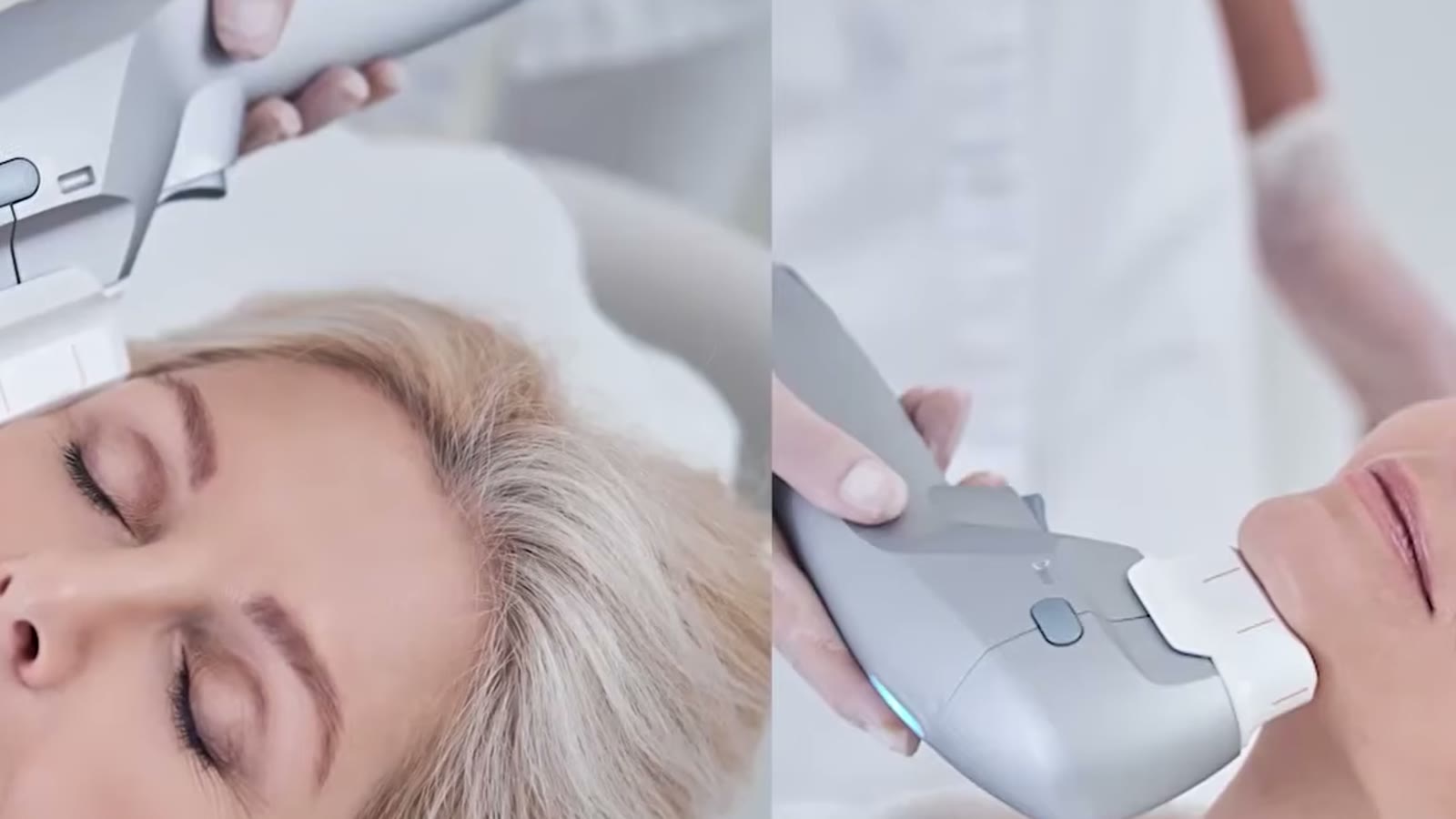
Because we operate inside the hotel building itself, guests staying at either property can use the on-site oxygen chamber and vitamin IV drip at no charge after their procedure, without leaving the building to find aftercare elsewhere. We build every treatment plan — whether it centers on an ultrasound or radiofrequency lifting device, a skin booster, or a combination — around an individual skin diagnosis first, rather than starting from a device name. Our Gangnam location also keeps Japanese, Chinese, and English interpreting staff on site, so a consultation about swelling management or a treatment timeline doesn't depend on the patient's Korean.
None of this replaces a proper consultation. A five-to-seven day recovery guideline is a starting point, not a guarantee, and how long any individual needs depends on the procedure and their own skin and healing pattern. What we can control is whether the days after treatment happen somewhere set up for them. If you're weighing what to check before booking a Seoul lifting consultation, our earlier guide to what to confirm before choosing a lifting clinic walks through the four questions we suggest asking, and our guide to matching a procedure to a short weekend trip is a useful next read if your visit is closer to two or three days than a full week.
FAQ
How many days should I plan for a lifting treatment and recovery in Seoul?
It depends on the specific procedure and your own skin, but recent industry guidance recommends at least five to seven days in Korea even for minimally invasive treatments, to allow time for swelling to settle. We work out a recovery timeline specific to your treatment and schedule during the consultation.
Is the oxygen chamber and vitamin IV drip available to everyone?
UHC hotel guests can choose one complimentary benefit: a 30-minute oxygen chamber session or a vitamin IV drip. If both are used, the vitamin IV drip costs KRW 55,000. Availability depends on your hotel stay, so it's worth confirming when you book your appointment.
Can I have my consultation in a language other than Korean?
Our Gangnam location keeps Japanese, Chinese, and English interpreting staff on site, so you can go through diagnosis and treatment planning in your own language.


댓글 (0)
댓글 작성
댓글을 작성하려면 로그인이 필요합니다.
로그인하기