
Lifting or Peeling? 4 Questions to Ask First
Whether a lifting treatment or a peeling treatment is the right call for a patient isn't something we decide by comparing device brochures. We decide it by looking at which layer of skin is actually causing the problem, because lifting and peeling don't touch the same layer at all. Before we recommend either one, we run through four specific questions with the patient — and we think patients should be asking us the same four before they book anything.
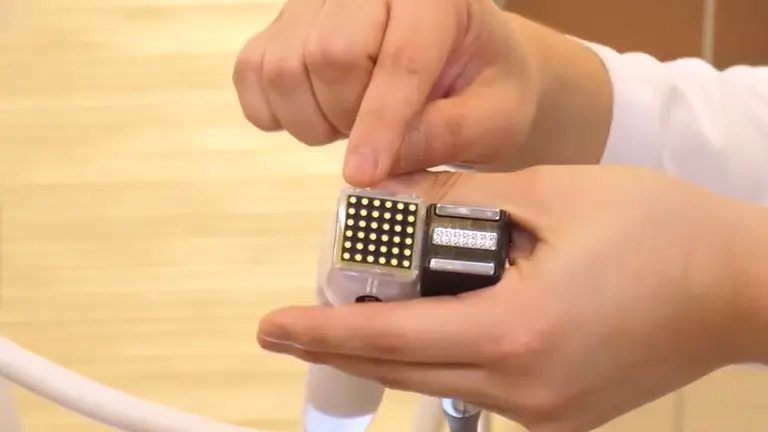
Different layers, different problems
Peeling works on the epidermis and, at most, the upper papillary dermis, while HIFU-based lifting is designed to reach the SMAS layer, several millimeters deeper. A peel simply doesn't reach that far down, no matter how strong the concentration.
That's the core reason a single consultation can't jump straight to "which machine." Pores, dullness, and pigment sit in the surface layers peeling addresses. Sagging and lost structural support sit in the deeper layer lifting addresses. If a patient's main complaint is sagging along the jawline, a peel — however well performed — won't move that needle, because it was never designed to reach the tissue causing it.
Question 1: Did the diagnosis come before the device name?
If a consultation opens with "which machine would you like" rather than "let's look at what's actually happening in your skin," the diagnostic step has been skipped. We start every lifting or peeling consultation with a skin assessment — what layer is involved, how long the concern has been present, and what the patient's realistic timeline looks like — before any device or treatment name enters the conversation.
Question 2: For lifting, are the settings specific?
Energy-based lifting is dosed, not applied uniformly. The number of shots delivered — often described in ranges like 300 or 600 — determines how much energy reaches the SMAS layer in a given session, and that number should change based on the area treated and the degree of laxity, not be fixed as a package default. If a clinic can't tell a patient roughly how many shots a session involves and why, the treatment plan likely hasn't been individualized yet.
Question 3: For peeling, does the plan account for concentration and repetition — not just one session?
Peeling results depend heavily on concentration and how many sessions are spaced over time, not on a single strong application. A plan built around one visit, regardless of strength, skips that variable.
Question 4: Is recovery mapped out alongside the procedure, not left for afterward?
Lifting and peeling carry different recovery profiles — energy-based lifting typically involves mild swelling for a short window, while peeling recovery depends on depth and concentration and can include visible surface change for several days. A clinic that discusses expected downtime and follow-up checkpoints during the consultation, rather than only at discharge, is treating recovery as part of the plan rather than an afterthought.
When lifting and peeling might be considered together
Because they act on different layers, lifting and peeling aren't mutually exclusive — but combining them in the same visit isn't automatic either. If a diagnosis shows both a surface concern and structural laxity, sequencing and spacing between the two need to be planned around cumulative skin stress and recovery time, not scheduled back-to-back by default. This is a case-by-case call that depends on skin condition at the time of consultation.
FAQ
Can lifting and peeling be done on the same day?
It depends on the individual diagnosis. If both surface concerns and structural laxity are present, combining them can be considered, but recovery time and cumulative irritation should be planned first rather than scheduling both by default.
Why does the shot count for lifting matter?
Shot count is directly tied to the total energy delivered to the treated layer. If a clinic doesn't discuss shot count during consultation, that's a sign the treatment plan hasn't been individualized to the patient's skin yet.
Can peeling alone produce a lifting-like effect?
Peeling works at the epidermis and upper dermis, while lifting targets the deeper SMAS layer. If sagging is the primary concern, peeling alone is unlikely to produce the structural change a patient may be expecting.


댓글 (0)
댓글 작성
댓글을 작성하려면 로그인이 필요합니다.
로그인하기