
Skincare After Your Procedure, On a Short Trip
Most post-procedure skincare guides are written for someone who flies home the same evening and manages the next two or three weeks from their own bathroom. That is not who I see most often. Roughly nine in ten of our patients are visiting Seoul from Japan, Taiwan, mainland China, or English-speaking countries, and many of them board a flight within a few days of treatment. The standard advice does not disappear, but the timeline it assumes has to be compressed, and a few of the details change with it.

Why we plan pigmentation risk differently for Asian skin
Post-inflammatory hyperpigmentation, the darkening that can follow any inflammatory skin event, is not evenly distributed across skin types. According to the StatPearls clinical reference maintained by the U.S. National Library of Medicine, this hyperpigmentation is more common and more severe in darker Fitzpatrick skin types, including populations of Asian, African, and Latin American descent, largely because those skin types carry greater baseline melanin production and more reactive melanocytes. That matters directly for us, since the overwhelming majority of our patients fall into that higher-risk range.
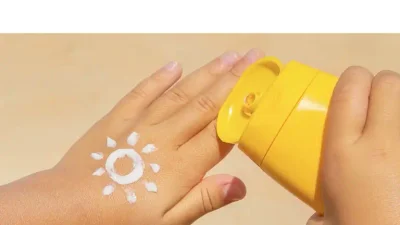
A systematic review published in the Australasian Journal of Dermatology looked specifically at PIH prevention strategies in patients with skin of colour, nearly all of Asian ethnicity, following laser and energy-based treatments. Of the preventive measures studied, sunscreen used alone or combined with other ingredients was the only one that consistently reduced how often PIH occurred. Notably, the same review found that cooling air devices, often assumed to be a purely comforting add-on during treatment, actually made PIH outcomes worse in some of the included studies. The takeaway for us is not "more intervention is better." It is that a small number of measures, applied consistently, do the real work, and diligent sun protection is the one that shows up every time.
What to do, and what to skip, in the first 4 to 12 days
Guidance published in the Aesthetic Surgery Journal Open Forum on periprocedural skincare for energy-based devices recommends pausing prescription-strength actives such as retinoids, AHAs, and hydroquinone for roughly 4 to 12 days after treatment, since they can irritate skin that is still healing and slow that process down. The same recommendations advise against toners during this window for the same reason, and point instead toward a simpler routine: a pH-balanced cleanser, a ceramide-containing moisturizer, sunscreen, and gentle barrier-supporting ingredients while the skin resets.
For a patient staying in Seoul for a week or less, this is not a routine they build gradually over the following month. It has to be in place from the day of treatment, because there is no "back home, settling in" period to phase it in during. We walk through this with every patient before they leave the room: what goes back into the skincare bag that afternoon, and what stays out until the skin has visibly calmed down.
How the hotel-based layout changes the last day of a trip
Our Gangnam location sits inside the UH FLAT SIGNATURE Gangnam building, and our Seocho location sits inside UH FLAT The Seocho. Treatments are performed in private treatment rooms, and hotel guests can use an oxygen chamber and a vitamin IV drip at no charge. In practice, that means a patient's last full day in Seoul can be spent recovering in the same building where the procedure happened, without a taxi ride, a new environment, or midday sun exposure added on top of healing skin.
For a short itinerary, we generally recommend scheduling the procedure mid-stay rather than on the final day, then using the remaining day or two inside the building for that quieter recovery period before a flight. Swelling and skin sensitivity both tend to respond better to a low-movement, indoor day than to a full day of sightseeing followed by hours in an airplane cabin. We have written in more detail about how we sequence the IV drip and oxygen chamber into that recovery window in a companion piece, Same-Day IV Drip After a Procedure: What Makes It Work.
What this looks like across a short trip
None of this replaces an individual consultation, since the right pace depends on the specific procedure, the treatment area, and how a patient's skin has responded in the past. But the shape of a short-stay plan tends to hold across cases: treat mid-trip rather than on the last day, keep the post-procedure routine simple and sunscreen-led rather than active-heavy, and use whatever recovery time is left in the itinerary somewhere low-friction rather than out in the sun. It is a narrower version of the same advice any dermatologist would give, adjusted for a calendar that does not have weeks of slack in it.
FAQ
Is it safe to fly the same day as a procedure?
It depends on the procedure. Anything that disrupts the top skin layer benefits from at least a day in an environment where sun exposure and friction from travel can be kept to a minimum before a long flight.
Can any visitor use the oxygen chamber and IV drip, or only hotel guests?
UHC hotel guests can choose one complimentary benefit: a 30-minute oxygen chamber session or a vitamin IV drip. If both are used, the vitamin IV drip costs KRW 55,000. Patients who are not staying there can ask during consultation whether the service is available to them as well.
When is it safe to start using retinol or AHA products again?
Only once the skin barrier has visibly recovered. The exact timing depends on the treatment area and method, so we confirm it individually during consultation rather than giving a single fixed number of days.


댓글 (0)
댓글 작성
댓글을 작성하려면 로그인이 필요합니다.
로그인하기